
Flexion-Distraction Therapy in Grapevine, TX
If your low back is already irritated, the prospect of twisting or a quick adjustment may make you tense before treatment even starts. Fair enough. Flexion-distraction gives Dr. Payne another option: a gentle, table-assisted technique that uses slow, controlled movement instead of forceful rotation. No pop is required. The name is more intimidating than the treatment. You lie face down on a specialized table while Dr. R. Brett Payne, DC, CCCN, guides one section of it through a measured bending and opening motion. He chooses the pace, direction, and range based on your exam and changes them according to how your symptoms respond.
How flexion-distraction works
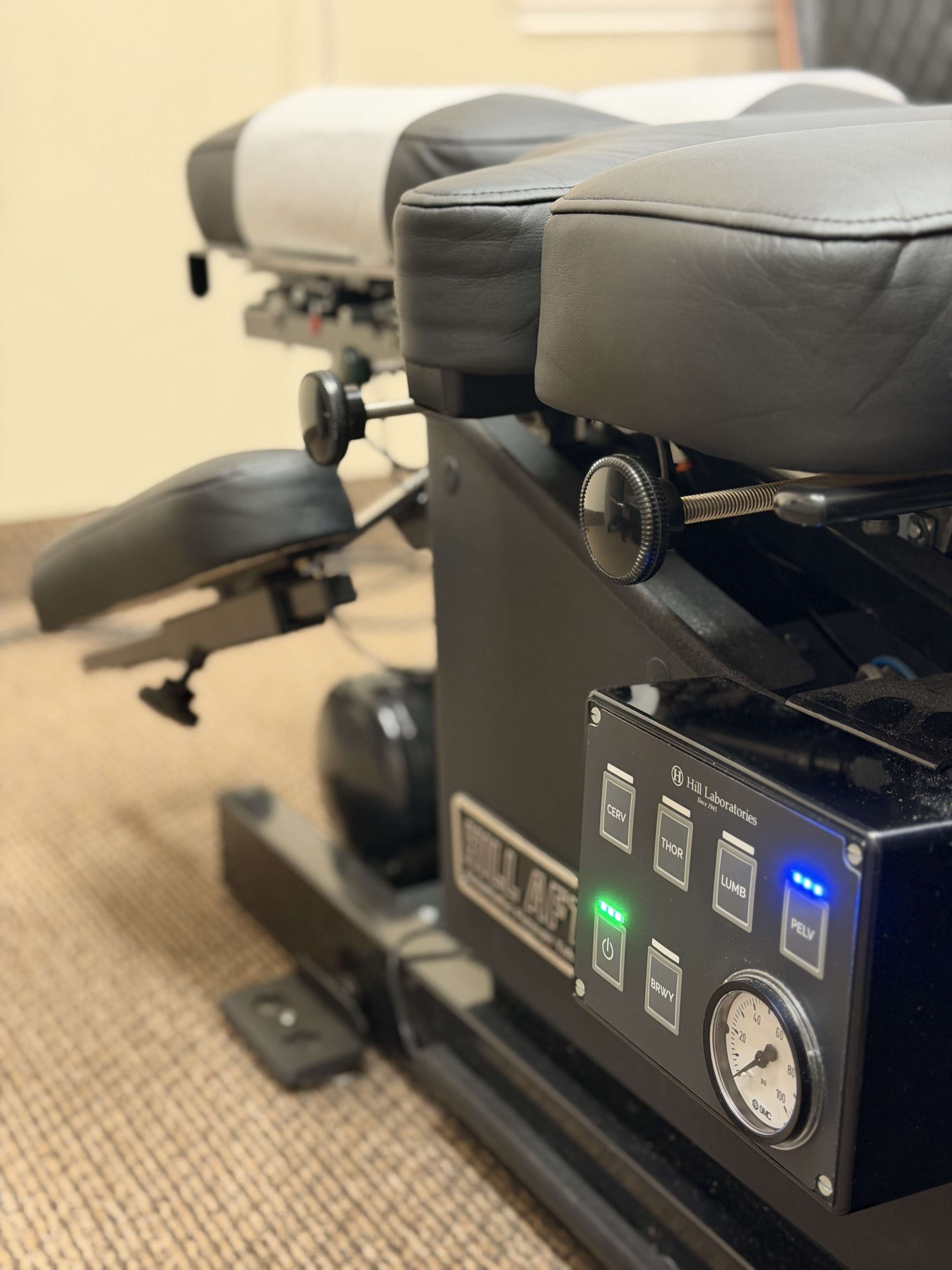
“Flexion” means bending. “Distraction” means applying a controlled separating or traction-like force. During treatment, the lower section of the table moves while Dr. Payne keeps one hand in a specific position on your low back. This allows him to direct the movement toward one area rather than moving the whole spine at once.
Flexion-distraction is a low-velocity, non-thrust form of spinal manipulation. The movement is slow and rhythmic, not a single quick impulse. It is also different from being strapped to a machine for sustained mechanical traction. Dr. Payne stays at the table and controls every movement, so he can change or stop it immediately based on what you feel.
You may feel gentle pressure, pulling, or movement through the low back and hips, but you should not have to brace against the treatment. A popping sound is neither necessary nor the point.
Why Dr. Payne may choose it
Flexion-distraction is not automatically the right choice just because it is gentle. It may be worth trying when the low back is too sensitive for a quicker adjustment, when someone strongly prefers lower-force care, or when slow, repeated movement fits the way the symptoms behaved during the exam.
Dr. Payne may consider it in selected cases involving:
- Persistent or recurring low-back pain
- Low-back pain that travels into the buttock or leg
- Certain disc-related or nerve-root symptoms
- Stiffness that responds better to slow, repeated movement than to rotation
- A need for a gentler starting point because of comfort, age, or an especially irritable area
This is a list of reasons to evaluate the technique, not a list of problems it automatically fixes. Labels such as “disc problem,” “sciatica,” and “stenosis” cover a lot of territory. The same table movement can feel relieving to one person and aggravating to another. The label matters, but the response during testing matters too.
A gentler technique still requires an exam
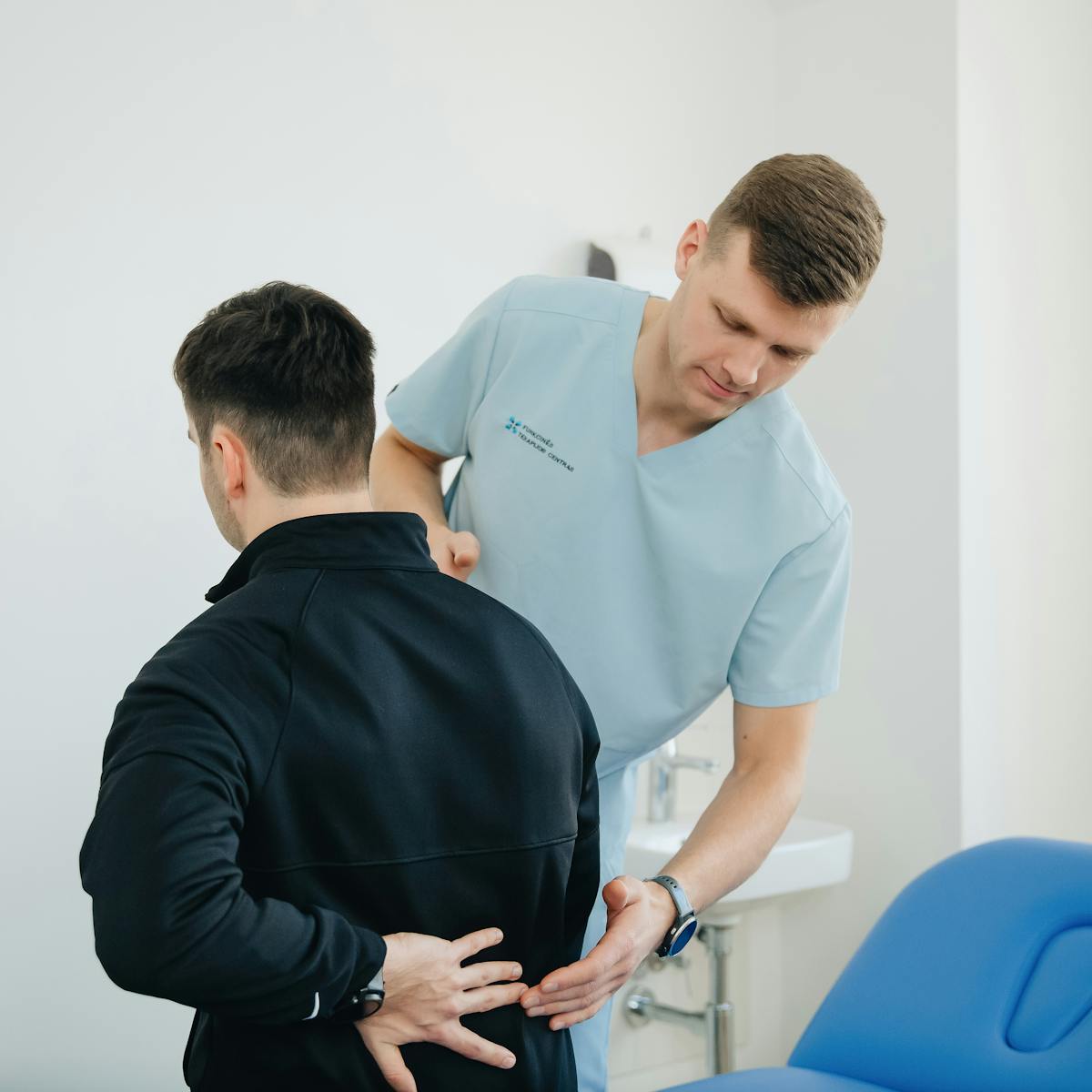
Before using flexion-distraction, Dr. Payne needs to know where the pain starts, whether it travels below the knee, and whether there is numbness or weakness. He may check your low-back and hip movement, walking, strength, reflexes, sensation, and the positions that change your leg symptoms.
Radiating pain can offer one useful clue. A movement that draws symptoms out of the foot or calf and closer to the low back may be more promising than one that sends the pain farther down the leg. Dr. Payne uses that response to choose the starting position and range. If a movement clearly spreads or intensifies the nerve symptoms, forcing more of it makes no sense.
You do not need imaging before every flexion-distraction treatment. It becomes more relevant after significant trauma, if neurological loss is getting worse, if the history suggests a condition that should not be treated manually, or if the result would change the treatment plan.
What a session feels like
You remain clothed and usually lie face down. Dr. Payne positions the table and explains where you may feel movement. He keeps one hand on your low back while the other controls the moving section of the table. The first movement may be quite small. If the area relaxes and your symptoms respond well, he can adjust the angle, direction, or range.
The movement is often repeated in short sets. Dr. Payne may pause to recheck the location of the pain, your range of motion, or the leg symptoms. More treatment is not automatically better. Your feedback matters, and there is no reason to stay quiet through a movement that feels wrong.
Some patients feel looser or move more easily right away. Others improve more gradually. Mild soreness can follow any unfamiliar manual treatment, but the session should not cause a clear increase in numbness or weakness, or send pain farther down the leg.
What the research can and cannot tell us
There is much less research on flexion-distraction specifically than on spinal manipulation in general. One randomized trial compared flexion-distraction with an active exercise program in 235 adults with chronic low-back pain. Both groups improved in pain and disability. The flexion-distraction group reported greater pain relief, especially among people with radiating nerve-root symptoms, but there were no significant differences between the groups on the main disability and general-health measures.
Promising? Perhaps. Proof that flexion-distraction is the best treatment for every disc or low-back problem? Not even close. Current back-pain guidelines support broader care that may include manual therapy, exercise, education, and a gradual return to activity. The point is to see whether your symptoms and function improve. A treatment table cannot “pull a disc back in,” despite what some painfully confident marketing might claim.
Hands-on care is only part of the plan
Flexion-distraction may calm an irritable area or make movement more comfortable. It cannot build strength, restore endurance, or prepare your back for all the lifting, sitting, driving, training, and other demands of life outside the clinic. That work happens away from the table.
Depending on the exam findings, Dr. Payne may pair treatment with:
- Simple movements chosen by what they do to your low-back and leg symptoms
- Trunk, hip, or lower-body exercises that build control without provoking the nerve
- Changes to tasks that repeatedly flare the area, such as sitting, driving, lifting, training, or work
- A gradual return to activities you have been avoiding
- Progress checks based on walking, sleep, strength, range of motion, and daily function
Hands-on care should help you get back to moving and doing more away from the clinic. Your back should not be treated as though it will always need a table.
When flexion-distraction is not the right place to start
A recent fracture or major injury, suspected spinal instability, severe bone fragility, infection, or progressive neurological loss may rule out flexion-distraction or require another evaluation first. New trouble controlling the bladder or bowels, numbness around the groin or saddle area, or rapidly worsening leg weakness requires urgent medical attention, not a routine chiropractic appointment.
Most people considering flexion-distraction do not have any of those warning signs. But “gentle” does not automatically mean appropriate. That is what the screening is for.
If sitting or driving repeatedly sends pain into your leg, read why sciatica can hurt more when you sit before deciding whether a lower-force approach may fit your pattern.
Start with a 15-minute conversation
Dr. Payne has more than 20 years of chiropractic experience and completed his Certification in Clinical Chiropractic Neurology at Parker University in 2007. Flexion-distraction is one of the techniques he may use in personalized chiropractic care, not a preset treatment for everyone with low-back pain.
Curious about the technique? Uneasy about forceful adjustments? Dealing with low-back pain that travels into the leg? Start with a free Discovery Call. Tell Dr. Payne what the pain feels like, where it travels, and which movements or positions change it. He can answer your initial questions and help you decide whether an in-office evaluation at Innovate Health makes sense.
Innovate Health is in Grapevine and serves patients from Southlake, Colleyville, Euless, Bedford, and nearby Dallas–Fort Worth communities.
Schedule Your Free Discovery Call
Talk with Dr. R. Brett Payne, DC, CCCN, Chiropractor & Clinical Chiropractic Neurologist.
Here's the latest
Get insights from our office on the latest treatments, trends and topics.



Ready to take the first step?
Let us guide you on your wellness journey. Book an in-office visit or schedule a phone consultation with the Doctor, today. Choose your path below.
.webp)