
What Pinched Nerve Symptoms Feel Like (And Why You Shouldn't Ignore Them)
.jpg)
Here are the most common signs:
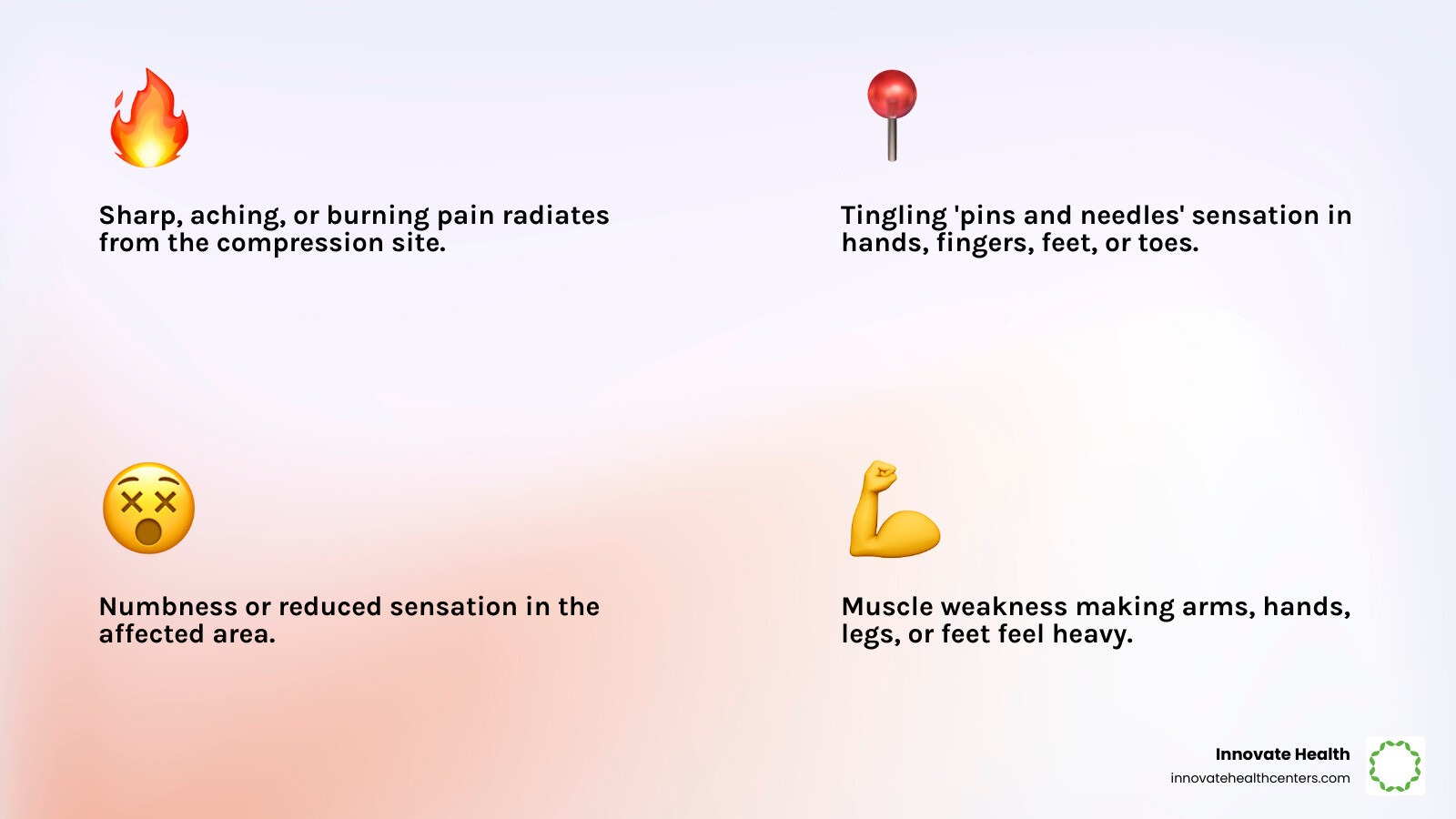
- Sharp, aching, or burning pain that radiates outward from one spot
- Tingling or "pins and needles" in the hands, fingers, feet, or toes
- Numbness or reduced sensation in the affected area
- Muscle weakness in the arm, hand, leg, or foot
- A limb that "falls asleep" — feels heavy, numb, or unresponsive
- Symptoms that worsen at night or in certain positions
These symptoms show up when a nerve gets compressed by surrounding tissue — like a bone, muscle, or tendon — and can't carry signals the way it normally would.
The good news? Most cases are temporary. Many people recover fully with rest and simple self-care. But if symptoms stick around for more than a week or two, or keep getting worse, that's your body telling you something needs attention.
If you're in your 40s and dealing with nagging back pain or unexplained weakness, a pinched nerve could easily be part of the picture — and it's worth understanding what's actually going on.
What is a Pinched Nerve?
While we often use the term "pinched nerve" in casual conversation, it isn't actually a formal medical diagnosis. Instead, it is a colloquial term used to describe what healthcare providers call nerve compression or nerve entrapment.
At its core, a pinched nerve occurs when surrounding tissues—such as bones, cartilage, muscles, or tendons—apply too much pressure to a nerve. This pressure disrupts the nerve's ability to do its job: sending vital electrical signals between your brain and your body. Think of it like a garden hose with a kink in it; the water (or in this case, the neural information) can't flow through properly.
Our bodies are powered by a complex network of peripheral nerves that branch out from the brain and spinal cord. When these nerves are squeezed, the resulting signal disruption can manifest as pain, loss of sensation, or even muscle dysfunction. According to the NINDS guide to pinched nerve disorders, these injuries can result from compression, constriction, or even stretching of the nerve fibers.
Common pressure mechanisms include:
- Herniated discs: When the soft center of a spinal disc pushes through a crack in the tougher exterior, pressing against a spinal nerve root.
- Bone spurs: Extra bone growths (often caused by osteoarthritis) that narrow the spaces where nerves travel.
- Inflammation: Swelling in joints or soft tissues that "crowds" the nerve's pathway.
Pinched Nerve Symptoms: Common Signs and Red Flags
Identifying pinched nerve symptoms early is the key to preventing long-term damage. While many of us have experienced a foot "falling asleep" after sitting awkwardly, chronic nerve compression is a different beast entirely.
The most hallmark sign is paresthesia—that prickly "pins and needles" sensation that feels like tiny electric shocks. You might also experience a dull, aching pain or a sharp, burning sensation that radiates outward from the site of the pinch. For instance, a pinch in your neck might cause pain that travels all the way down to your fingertips.

Comparing Mild vs. Chronic Compression
Not all nerve compression is created equal, and understanding the difference between a temporary pinch and a chronic condition can help you decide when to take action.
Mild or temporary compression is usually caused by something simple—like sleeping in an awkward position or crossing your legs for too long. It typically lasts anywhere from a few minutes to a few hours, shows up as that familiar "pins and needles" sensation (called paresthesia), and resolves on its own once you shift positions or start moving around.
Chronic radiculopathy is a different story. It's usually driven by structural issues like a herniated disc, spinal stenosis, or arthritis, and can persist for weeks, months, or even years. Instead of a mild tingling, you're more likely to experience sharp radiating pain and, in more advanced cases, actual muscle wasting. This level of compression rarely resolves on its own and typically requires professional intervention to address the underlying cause.
One unique characteristic of pinched nerve symptoms is that they often worsen at night. This happens because our body's natural anti-inflammatory cortisol levels drop while we sleep, and certain sleeping positions can further compress already irritated nerves. Additionally, you might notice decreased sensation—a feeling of "deadness" or heaviness in the limb—which indicates the nerve is struggling to transmit sensory data back to the brain.
Recognizing Pinched Nerve Symptoms in the Upper Body
When a nerve is compressed in the upper body, it usually involves the cervical spine (neck), shoulder, or wrist.
- Cervical Radiculopathy: This occurs when a nerve root in the neck is pinched. It often leads to pain that shoots down the arm, muscle weakness in the shoulder, and a loss of grip strength. You might find it difficult to hold a coffee mug or turn a doorknob.
- Carpal Tunnel Syndrome: Perhaps the most famous upper-body nerve issue, this involves the median nerve in the wrist. According to the Cleveland Clinic overview of nerve compression, this often results in hand numbness and tingling in the thumb and first three fingers.
- Ulnar Nerve Entrapment: Often called "Cubital Tunnel Syndrome" when it happens at the elbow, this affects the "funny bone" nerve. It causes tingling and numbness in the ring and pinky fingers and can make the hand feel stiff or clumsy.
If hand numbness is waking you, the guide to carpal tunnel versus a neck nerve problem compares median, ulnar, and cervical patterns and explains why shaking out the hand is a clue—not a diagnosis.
Identifying Pinched Nerve Symptoms in the Lower Body
The lower body is a common site for nerve issues because the lumbar spine (lower back) bears so much of our body weight.
- Sciatica: This is a form of lumbar radiculopathy where the sciatic nerve—the longest nerve in the body—is compressed. It typically causes shooting leg pain that travels from the lower back, through the buttock, and down the back of one leg.
- Foot Drop: A more severe symptom where weakness in the muscles makes it difficult to lift the front part of the foot, causing it to drag on the floor while walking.
- Meralgia Paresthetica: This involves the lateral femoral cutaneous nerve and causes a distinct burning sensation, numbness, or tingling on the outer part of the thigh. Mayo Clinic research on pinched nerve causes notes that this is often caused by tight clothing or obesity.
- Tarsal Tunnel Syndrome: Similar to carpal tunnel but in the ankle, this causes pain and tingling on the sole of the foot.
Red Flag Warning: If you experience "saddle anesthesia" (numbness in the areas that would touch a saddle) or a sudden loss of bowel or bladder control, seek emergency medical attention immediately. These can be signs of Cauda Equina Syndrome, a serious surgical emergency.
Common Causes and Risk Factors
Why do nerves get pinched in the first place? Often, it’s a combination of wear-and-tear and lifestyle factors.
- Osteoarthritis and Rheumatoid Arthritis: Bone spurs caused by osteoarthritis can narrow the spinal canal, while the inflammation from rheumatoid arthritis can compress nerves in the joints.
- Repetitive Motion: Jobs or hobbies that require the same movement over and over—like typing, assembly line work, or even certain sports—can cause tendons to swell and pinch nearby nerves.
- Obesity: Excess body weight adds pressure to the nerves, particularly in the spine.
- Pregnancy: Weight gain and water retention during pregnancy can lead to nerve compression, most commonly in the wrists (carpal tunnel).
- Thyroid Disease and Diabetes: People with diabetes are at a higher risk of nerve damage and compression because high blood sugar can damage nerve fibers and blood vessels.
Poor posture is another major culprit. We spend hours hunched over computers or "tech necking" over smartphones, which puts incredible strain on the cervical spine. Traumatic accidents, like a fall or a car crash, can also shift spinal structures suddenly, leading to acute nerve entrapment.
Diagnosis and Professional Treatment Options
If your pinched nerve symptoms don't resolve with a few days of rest, it’s time for a professional evaluation. At Innovate Health in Grapevine, TX, we believe in a thorough diagnostic process to find the "why" behind your pain.
Diagnosis typically begins with a physical examination where we check your reflexes, muscle strength, and sensory responses. If the cause isn't clear, we may recommend diagnostic imaging like an MRI or CT scan to see if a disc or bone spur is the culprit.
In some cases, we use nerve studies to measure how well signals are moving:
- Electromyogram (EMG): Measures the electrical activity of muscles.
- Nerve Conduction Study: Measures how fast an electrical impulse moves through your nerve.
Once we have a clear picture, we focus on integrative health services that prioritize conservative care. Our goal is to relieve pressure on the nerve without jumping straight to invasive measures. This often includes:
- Chiropractic Adjustments: Realigning the spine to reduce mechanical pressure on nerve roots.
- Therapeutic Massage: Reducing muscle tension that may be strangling a peripheral nerve.
- IV Therapy: Providing the body with the micronutrients needed for nerve repair and inflammation reduction.
For the vast majority of patients, these conservative approaches are highly effective. However, if symptoms are severe or progressive, we coordinate with medical specialists for advanced interventions like corticosteroid injections or, as a last resort, surgical consultation.
Home Remedies and Prevention Strategies
While professional care is vital for chronic issues, many mild pinched nerves can be managed at home with the right strategy.
- Rest and Activity Modification: This is the most important step. If a specific activity (like tennis or typing) triggered the pain, stop doing it for a few days to let the inflammation subside.
- Ice and Heat: Apply ice packs for 15-20 minutes several times a day during the first 48 hours to reduce swelling. Afterward, heat can help relax tight muscles that might be contributing to the pinch.
- Ergonomics: If you work at a desk, ensure your monitor is at eye level and your chair provides proper lumbar support. Avoid crossing your legs for long periods, as this is a common cause of pinched nerves in the legs.
- Supportive Devices: A soft neck collar or a wrist splint can help "immobilize" the area, preventing you from moving in ways that further irritate the nerve. However, these should only be used short-term.
We often find that Massage and Chiropractic: A Perfect Pair for Pain Relief. While the adjustment addresses the bone and joint alignment, massage addresses the soft tissue "hugging" the nerve.
To prevent future episodes, focus on:
- Core Strengthening: Strong abdominal and back muscles support the spine.
- Flexibility: Regular stretching keeps the joints mobile and less likely to "trap" a nerve.
- Weight Management: Reducing the load on your spine and joints significantly lowers your risk.
Frequently Asked Questions about Nerve Compression
When should you see a doctor for pinched nerve symptoms?
You should schedule an appointment if your symptoms are persistent and interfere with your daily life. Specifically, see a professional if the pain lasts more than two weeks, if you notice visible muscle wasting (atrophy), or if the pain is so severe that over-the-counter medications don't help. Any loss of bladder or bowel control requires an immediate trip to the emergency room.
How long does it take for a pinched nerve to heal?
For minor cases, such as a limb "falling asleep" or a mild strain, you might feel better in just a few days. More significant compressions typically take 4 to 6 weeks to heal with conservative care. Because nerves heal slowly—roughly one millimeter per day—patience is key. Early intervention is the best way to speed up this timeline and ensure full nerve regeneration.
Is surgery always necessary for a pinched nerve?
Absolutely not. In fact, roughly 90% of people with pinched nerves find relief through conservative treatments like chiropractic care, physical therapy, and rest. Surgery is generally only considered if there is evidence of progressive nerve damage, intractable pain, or if the compression is caused by something that cannot be moved through manual therapy (like a large bone tumor or severe spinal stenosis). Common procedures include a discectomy (removing part of a disc) or a laminectomy (removing part of the vertebrae to create more space).
Conclusion
Dealing with pinched nerve symptoms can be frustrating and painful, but it doesn't have to be your permanent reality. Whether it’s a tingling hand from too much typing or shooting sciatica from a weekend of gardening, your body is sending you a signal that it needs help.
At Innovate Health, we specialize in a holistic, root-cause approach to wellness. We don't just want to mask your pain; we want to understand why the nerve is being compressed and create a tailored plan to get you back to your best self. By combining chiropractic adjustments with integrative medical oversight, we provide a path to recovery that is as unique as you are.
If you are struggling with persistent nerve pain in the Grapevine area, don't wait for the damage to become permanent. Contact our Chiropractor Grapevine team today to start your journey toward a pain-free life.

Here's the latest
Get insights from our office on the latest treatments, trends and topics.



What Our Patients Say About Dr. Payne
.svg)

Ready to take the first step?
Let us guide you on your wellness journey. Book an in-office visit or schedule a phone consultation with the Doctor, today. Choose your path below.
.webp)