
Why Does Sciatica Hurt More When You Sit? What Helps and When to Get Checked
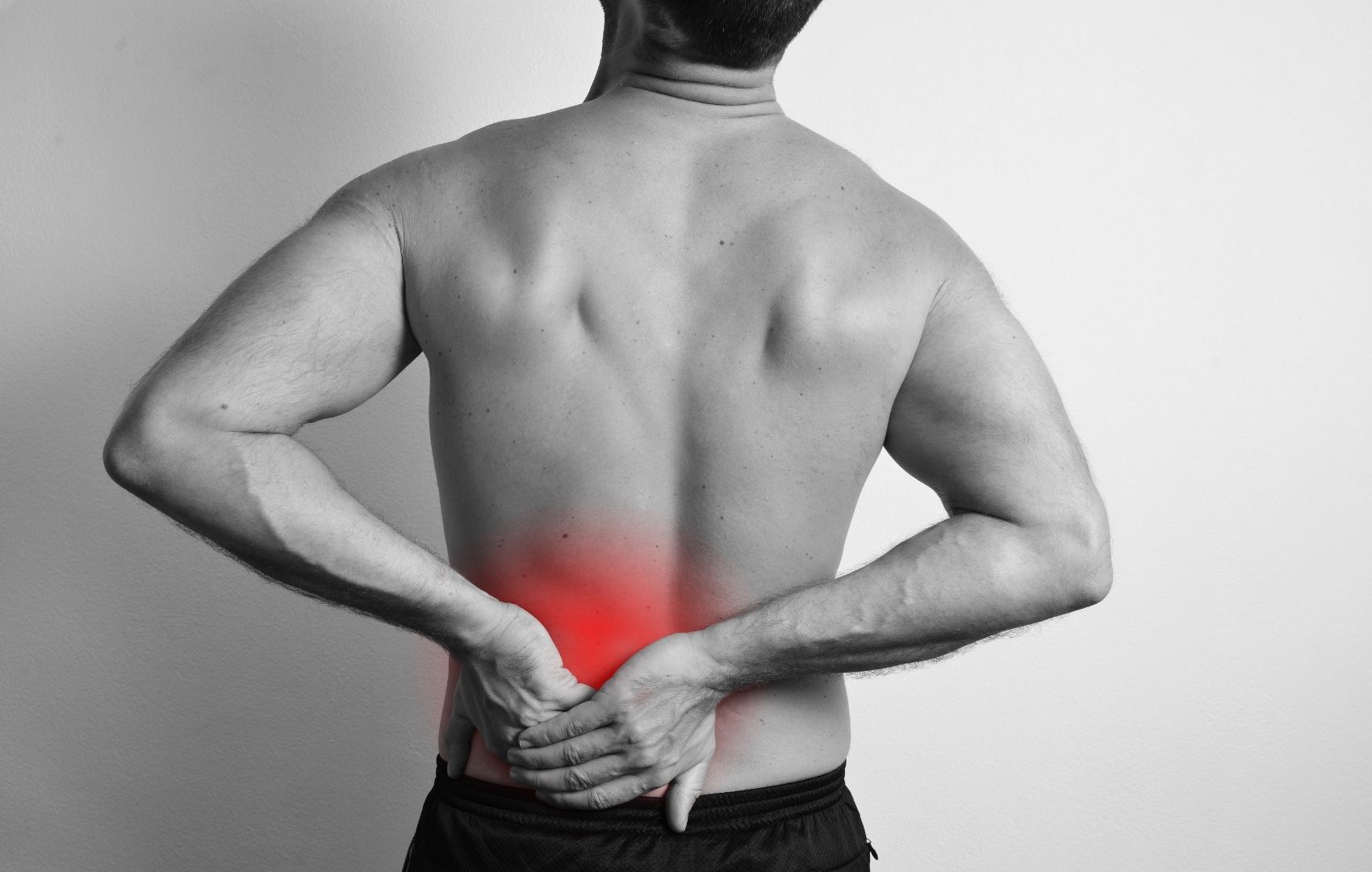
Short answer: Sciatica can hurt more when you sit because the position keeps your hips bent and your low back under a sustained load. If a lumbar nerve root is already irritated, a long desk session or drive may increase leg pain, tingling, or numbness. The useful response is usually not to find one “perfect” chair. It is to change positions before symptoms build, keep moving in tolerable amounts, and get checked when the pattern is persistent, worsening, or includes weakness.
That does not mean sitting causes every case of sciatica—or that everyone with sciatica feels worse in a chair. Some conditions that produce leg symptoms actually feel better with sitting and worse with standing or walking. The way your symptoms respond to position is one of the clues Dr. Payne uses during an evaluation.
Why can prolonged sitting aggravate radiating leg pain?
Sciatica describes pain and other nerve-related symptoms that travel from the low back or buttock into the leg. The symptoms may feel sharp, burning, electric, or deeply aching. Some people notice tingling, numbness, or weakness as well.
Several different problems can create that pattern, including a sensitive or herniated disc, narrowing around a spinal nerve, inflammation near a nerve root, or less commonly irritation farther along the nerve’s path. Because the causes differ, there is no single explanation for why sitting makes every case worse. Three factors often matter.
1. Sitting holds the low back and hips in one position
Most chairs keep the hips flexed for long stretches. Depending on the chair and the way you sit, the low back may also stay rounded. For someone with a sensitive disc or nerve root, that sustained position can increase irritation even when no single moment feels dramatic.
The problem is often the duration, not one obviously “bad” posture. A comfortable position held too long can still become an aggravating position. That is why small, frequent changes may help more than repeatedly correcting yourself into a rigid pose.
2. Symptoms can build before you notice them
Nerve-related pain is not always immediate. You may sit through the first part of a meeting or commute without much trouble, then notice the ache or burning spreading farther into the thigh, calf, or foot. By that point, the area has been irritated for a while.
Changing position before the pain peaks is usually easier than trying to calm a full flare. If you know your leg starts hurting after 40 minutes, a brief standing or walking break at 25 to 30 minutes may be more useful than waiting for the symptoms to force you out of the chair.
3. Driving combines sitting with vibration and limited movement
Driving can be especially uncomfortable because you cannot shift freely, your right leg stays engaged with the pedals, and road vibration adds another source of repeated loading. The American Academy of Orthopaedic Surgeons lists frequent driving and long periods of sitting among factors that can stress the lower back and discs.
A better seat angle may help, but it cannot replace breaks on a long drive. For many people, stopping briefly to stand and walk is more useful than chasing a flawless car-seat setup.
Sciatica versus ordinary low-back pain after sitting
Not all back pain that appears in a chair is sciatica. Ordinary sitting-related low-back pain tends to stay in the back or spread only into the nearby buttock area. It may feel stiff, sore, or tired and often eases after a few minutes of walking.
Sciatica is more likely when symptoms follow a path into one leg and include a nerve-like quality. Common clues include:
- Pain that begins in the low back or buttock and travels into the thigh, calf, foot, or toes
- Sharp, burning, electric, or shooting pain rather than a local muscular ache
- Tingling or numbness along part of the leg or foot
- Symptoms that are much stronger on one side than the other
- Weakness, such as trouble lifting the foot or pushing off through the toes
There is overlap. Hip problems, sacroiliac irritation, and muscle pain can imitate parts of a sciatic pattern, while some people with true nerve-root irritation have very little back pain. Where the symptoms travel is useful information, but it is not a diagnosis by itself.
If your discomfort stays local to the back, read why your low back hurts after sitting all day. If pain travels down the leg, the sciatica treatment page for Grapevine explains how Dr. Payne evaluates the broader symptom pattern.
What position changes and movements may help?
The goal is not to force the nerve to “loosen.” It is to reduce repeated aggravation and find movements your symptoms tolerate. A few practical options are reasonable starting points for many people:
- Interrupt sitting before symptoms peak. Stand or walk briefly at a predictable interval rather than waiting until the leg pain forces you to move.
- Support your feet. Keep both feet on the floor or a footrest so you are not hanging from the edge of the chair or twisting toward one side.
- Test a small amount of lumbar support. A rolled towel or modest chair support may feel better, but remove it if it sends symptoms farther down the leg.
- Change more than one thing. Alternate between sitting, standing, and short walks instead of replacing all-day sitting with all-day standing.
- Use gentle movement as a test, not a contest. Continue movements that feel comfortable or draw symptoms out of the foot and closer to the back. Stop if pain travels farther down the leg or numbness or weakness increases.
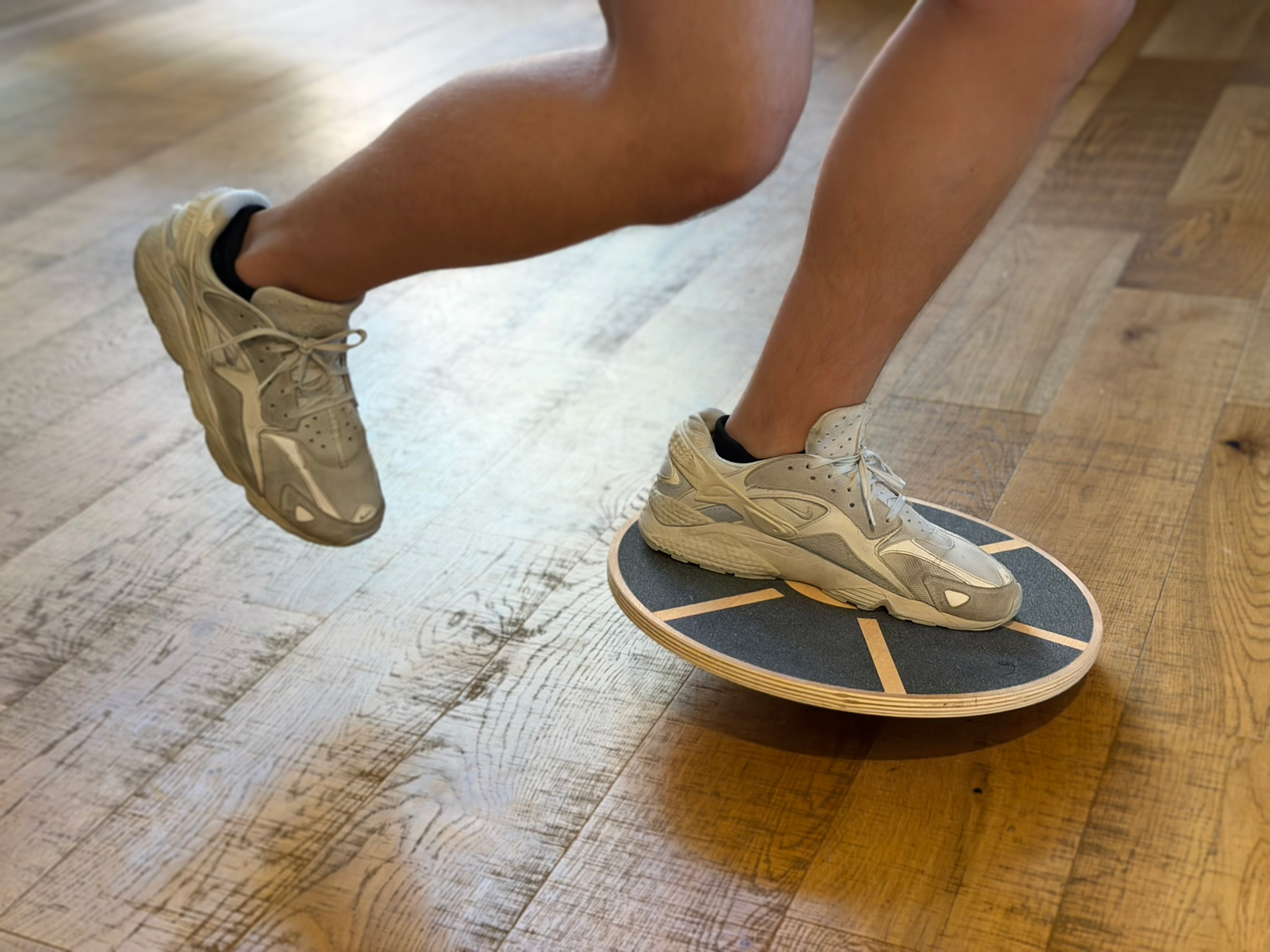
That last point is important. Symptoms that retreat from the foot toward the back can be a useful sign in some cases. Symptoms that spread farther down the leg, or a clear increase in numbness or weakness, are reasons to stop and reassess.
Why generic “sciatica stretches” can sometimes make things worse
Search for sciatica pain when sitting and you will find endless lists of hamstring stretches, hip stretches, twists, and nerve exercises. The problem is that sciatica is a symptom pattern, not one uniform injury.
A strong hamstring stretch, for example, may also place tension on an already sensitive nerve. A deep forward fold may feel fine for one person and send burning pain into another person’s calf. A movement that helps a disc-related pattern may be a poor fit for symptoms caused by spinal narrowing. Even a technically correct exercise can be wrong for the current stage of an irritable problem.
You do not need to avoid all movement. Exercise and ordinary activity are often important parts of recovery. The useful question is which movements help you build tolerance without repeatedly provoking the nerve.
When should leg pain while sitting be evaluated?
Consider an evaluation when sitting or driving repeatedly triggers leg pain, when the symptoms keep returning, or when they interfere with work, sleep, exercise, or normal travel. You should also get checked if numbness persists after you change position or if you notice that one leg or foot is not working the way it normally does.
Examples of weakness include difficulty lifting the front of the foot, repeatedly catching the toes, trouble walking on the heels or toes, or a leg that gives way. These signs deserve more attention than pain intensity alone.
Our article on what pinched nerve symptoms feel like explains how radiating pain, tingling, numbness, and weakness can show up in daily life.
Symptoms that need urgent medical care
Seek urgent medical attention for new loss of bladder or bowel control, numbness around the groin or saddle area, severe or rapidly worsening leg weakness, symptoms affecting both legs, or sciatica that begins after a serious accident or injury. These are not problems to manage with chair changes or a routine chiropractic appointment.
Most sitting-related leg pain is not an emergency. The warning signs are included because the cost of missing them is too high.

Where adjustments, exercise, and lower-force care may fit
There is no universal “sciatica adjustment,” and no single technique fixes every case. Care should begin with the history and exam: where the pain starts, how far it travels, what sitting does to it, whether sensation or strength has changed, and which movements calm or aggravate the symptoms.
For selected patients, chiropractic adjustments or joint mobilization may help restricted areas move more comfortably. The force and position should fit the patient rather than forcing every case into the same routine.
If a lower back is especially irritable or someone prefers a gentler approach, flexion-distraction therapy may be one option. It uses slow, controlled, table-assisted movement rather than a quick rotational thrust. It is not automatically right because it is lower-force; Dr. Payne still checks how the leg symptoms respond.
Hands-on care is only part of a conservative plan. Exercise helps rebuild strength, control, and tolerance for sitting, driving, walking, lifting, and work. Guidance from NICE considers manual therapy for low-back pain with or without sciatica as part of a treatment package that includes exercise—not as a stand-alone answer.
A sensible plan may combine:
- Clear explanations and temporary changes to the sitting, driving, lifting, or training tasks that keep provoking symptoms
- Chiropractic adjustments or slower joint mobilization when the exam suggests they are appropriate
- Lower-force table-assisted care, such as flexion-distraction, when the symptom response supports it
- Individualized exercise to rebuild trunk, hip, and lower-body strength and tolerance
- Progress checks based on leg symptoms, strength, sensation, walking, sleep, and the activities you need to regain
- Referral for medical evaluation or imaging when the history or neurological findings make that the safer next step
The plan should change as you improve. The long-term goal is not dependence on a chair, a stretch, or a treatment table. It is greater confidence and capacity in ordinary life.
Getting the sitting pattern evaluated in Grapevine
A useful evaluation does not start by assuming every case is a disc problem or that every person needs the same treatment. Dr. R. Brett Payne, DC, CCCN, listens to where the symptoms travel, how sitting and driving affect them, what you have already tried, and what the problem is keeping you from doing. He can then explain whether chiropractic care may fit, whether a lower-force option makes sense, or whether another kind of evaluation should come first.
Innovate Health is located in Grapevine and serves patients from Grapevine, Southlake, Colleyville, Euless, Bedford, and nearby Dallas–Fort Worth communities.

Here's the latest
Get insights from our office on the latest treatments, trends and topics.


What Our Patients Say About Dr. Payne
.svg)

Ready to take the first step?
Let us guide you on your wellness journey. Book an in-office visit or schedule a phone consultation with the Doctor, today. Choose your path below.
.webp)